
A new lift is justified by traffic, building constraints and operating risk—not by room count alone. You will be able to compare installation with modernization, a second lift or no change, then build a specification and approval checklist for a defensible decision.
Key takeaways
- Measure guest, staff and event traffic before choosing the number of lifts.
- Compare modernization, component replacement and a second car with full replacement.
- Check shaft dimensions, electrical capacity, fire approvals and lift permissions first.
- Put response times, uptime, testing and risk allocation into the contract.
Start with the hotel’s actual problem, not a lift-count rule
If guests wait through check-in, banquet discharge or breakfast because one lift serves more people than it can carry, the hotel has a capacity problem—not a lift-count problem.
A new elevator installation for hotels in Gurugram has a strong case when the property is newly built, adds floors or rooms, converts an office or other building into a hotel, leaves guest levels inaccessible, receives persistent complaints, or has shifted from low-rise use to high occupancy.
Installation is the wrong choice when occupancy is low, existing lifts already meet demand, or no suitable shaft location exists. Unresolved building or fire approvals, inadequate electrical capacity, and a budget that cannot absorb civil works and operating downtime also stop the project. A new car will not cure a planning or approvals failure.
Use this decision test before requesting a quotation:
1. Record waiting times during check-in, check-out, breakfast, restaurant peaks and banquets. Record breakdown frequency, entrapment response, inaccessible areas and the number of rooms and banquet spaces affected.
2. Calculate lost room and banquet revenue during outages, then add breakdown call-outs, energy consumption, recurring maintenance, statutory work and obsolete controller or door-part lead times.
3. Confirm planned room or banquet expansion, approved occupancy, building height, fire strategy and evacuation arrangements. Passenger lifts do not replace protected stairs or provide general fire evacuation.
4. Obtain a site survey covering shaft, pit, overhead, landing openings, structural loads, machine access, power, earthing, ventilation, drainage and fire separation. Reject the proposal if approvals, generator capacity or the budget for civil work and downtime remain unresolved.
Measure guest, staff and event traffic before deciding how many lifts you need
Room count alone cannot determine lift quantity. Commission a traffic study that tests five-minute handling and acceptable waiting time against room count, floors, travel height, approved occupancy, car load, rated speed and door-opening time.
Model these demand peaks separately:
- Check-in, check-out and group luggage
- Breakfast release, restaurant peaks and room service
- Weddings, conferences and banquet discharge
- Housekeeping, laundry and maintenance movement
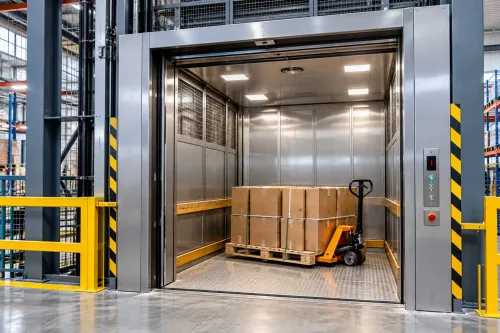
Use the results to decide whether hotel passenger elevator installation needs a separate service or goods lift. Size that lift for linen carts, food trolleys, luggage and equipment, not merely passenger weight. A busy banquet hotel can overload guest cars with service traffic even when average occupancy appears modest.
| Passenger lift | Carries guests and visitors; sized for passenger demand | Main guest circulation |
|---|---|---|
| Accessible passenger lift | Provides the required accessible route, controls and clearances | Guest floors or facilities on an accessible route |
| Service lift | Handles carts, trolleys, luggage and equipment | Significant banqueting, restaurants, housekeeping or laundry |
| Fireman’s lift | Provides protected fire-service operation where the fire strategy requires it | Buildings requiring this designated facility |
A fireman’s lift is not a general evacuation lift. Ordinary passenger lifts do not replace protected stairs or become a general fire-evacuation system. Confirm the fire strategy, generator operation and protected routes before approving the layout.
Where guest and service flows overlap, compare separate lifts against waiting times during the worst five-minute event, not normal daytime averages.
Compare a new lift with modernization, component replacement and a second car
Best value depends on the failure you need to solve, not on the lowest quotation. A controller, drive or traction-machine replacement can restore reliability while retaining the car, rails and shaft, but it cannot enlarge an undersized car or correct unsafe building conditions.
| Option | What it addresses | When it applies |
|---|---|---|
| New lift installation for hotels | Capacity, accessibility, clearances and current equipment | The shaft, pit, overhead, landings, structure and power supply can support a compliant system |
| Modernization | Obsolete controls, drives, doors or finishes | Retained equipment still offers adequate capacity, clearances, fire separation and spare-parts support |
| Component replacement | A failed controller, drive or traction machine | The car, rails, doors and shaft remain serviceable |
| Second car | Waiting and mixed guest-service traffic | A viable shaft, pit, overhead, landing access, structural support, electrical supply and construction budget exist |
Modernization is false economy if worn guide rails, obsolete doors, structural corrosion, poor shaft clearances or inadequate fire separation remain. It also fails when the retained car limits wheelchair access, capacity or replacement-part availability.
Compare each option against room and banquet revenue lost during downtime, guest complaints, breakdown call-outs, energy consumption, statutory work, recurring maintenance and proprietary-part lead times. Include the cost of keeping an old lift unavailable; a cheaper purchase can cost more when one unavailable car disrupts check-in, events and service traffic.
A second car helps only if construction is practical and its running cost fits the hotel’s demand.
Test the proposed equipment against the building, power system and approvals
A quotation for hotel elevator installation in Gurugram is incomplete until it proves that the equipment fits the building, survives its power conditions and can legally operate.
1. Require a written performance schedule stating rated load in kilograms, car dimensions, clear door width, door-opening time, rated speed, acceleration, jerk limits, levelling accuracy, noise and vibration limits, number of stops, travel height, control system, standby behaviour, rescue operation, emergency lowering, ventilation, lighting and generator compatibility.
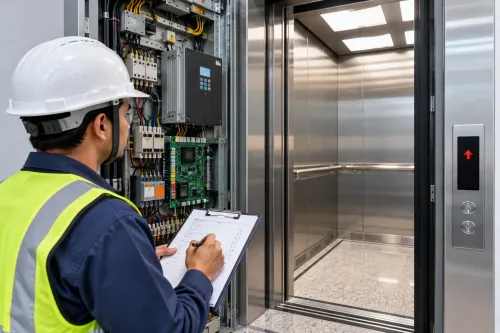
2. Commission a site survey covering shaft dimensions, pit depth, overhead clearance, guide-rail zones, landing-door openings, machine access, structural loads, drainage, pit waterproofing, earthing, ventilation and fire separation. Existing clearances can prevent a higher-capacity car from fitting safely.
3. Treat machine-room-less equipment as a space-saving arrangement, not a zero-space solution. The design still needs compliant pit and overhead dimensions, controller access, rescue access and safe maintenance working space.
4. Demand a power schedule showing operation during utility failure, generator transfer, fire alarm, phase failure, voltage variation and entrapment. Confirm automatic-transfer behaviour, generator capacity and restart sequencing before acceptance.
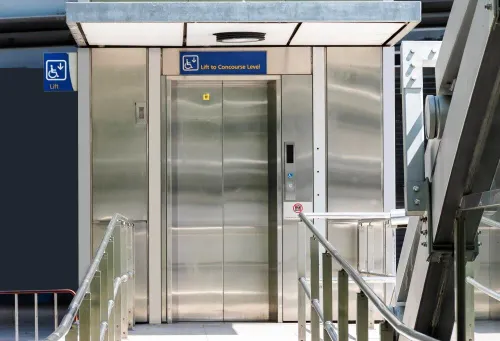
5. Check an accessible route to every relevant guest and public level, including reachable controls, tactile or Braille identification, audible and visual indicators, suitable car dimensions and manoeuvring space outside the lift. Confirm fireman’s operation where required.
6. Obtain Haryana installation inspection, licence or permission records, plus building and fire approvals. A factory test certificate does not authorise hotel operation.
Turn the decision into a contract with measurable service and risk controls
Ask at least two vendors for competing, site-specific proposals. Choose an elevator installation company in Gurugram only after comparing documents, not claims about reliability or a “comprehensive AMC.”
- General-arrangement drawings, rated-load and structural load calculations, traffic assumptions, and generator-load schedules
- A programme showing procurement, civil works, testing, statutory inspection, handover, and planned shutdown duration
- A responsibility matrix covering shaft alterations, pit waterproofing, drainage or pumping, monsoon ingress, construction dust, corrosion, damaged sills, sensors, and damage caused by other contractors
- Testing records, Haryana statutory inspection or permission documents, fire and accessibility approvals, as-built drawings, manuals, and rescue procedures
Put operating obligations in the contract. Specify preventive maintenance frequency, 24-hour entrapment response, the maximum breakdown-response time, critical-spares stock or lead times, independent inspection support, named escalation contacts, and reporting duties. Define remote-monitoring limits: who receives alarms, what data is collected, and who authorises remote resets.
List exclusions precisely. Water damage, misuse, vandalism, construction contamination, voltage events, and damage by hotel contractors need assigned remedies rather than vague disclaimers. X Pro Elevators can compete fairly when it accepts these measurable obligations in writing.
Approve the project only if the design meets peak five-minute demand, approved fire and accessibility requirements, generator and structural constraints, and the hotel’s downtime budget. If one fails, postpone installation or redesign the project.
Frequently asked questions
How do you decide how many elevators a hotel needs?
Measure guest arrivals, check-in periods, breakfast movement, housekeeping traffic, service-floor trips and banquet discharge before selecting lift capacity and car numbers.
When is modernization better than a new hotel elevator installation?
Modernization suits a usable shaft and car where controls, doors, drives or signalling limit performance. Replace the lift when safety, structural condition, obsolescence or capacity makes upgrades uneconomic.
What must you check before installing a new hotel passenger elevator?
Verify shaft dimensions, pit and overhead clearances, machine-room or machine-room-less requirements, electrical supply, standby power, fire strategy, structural loads and required approvals.
What should a hotel elevator contract measure?
Specify delivery milestones, testing responsibilities, uptime, preventive-maintenance visits, emergency response times, spare-parts obligations, exclusions and consequences for missed service levels.