
A lift cannot be operated lawfully merely because installation is complete, an annual maintenance contract is active, or the manufacturer has issued factory documents. You need to understand which authority inspects the lift, what evidence and tests it requires, how defects are closed, and which document proves permission to operate.
Key takeaways
- The owner or authorised representative applies for each lift at its premises.
- The Haryana Electrical Inspectorate conducts the statutory certification process.
- Inspectors inspect the installation before witnessing required safety tests.
- Keep the issued elevator certificate as proof of compliance.
Who starts the elevator certificate process in Gurugram?
The Haryana Electrical Inspectorate handles the statutory elevator certificate process in Gurugram—not the municipal corporation or the lift manufacturer. The owner or authorised representative starts the application for one specific lift at one specific premises.
Permission to erect or install the lift is an earlier approval; it is not the licence required before the lift operates or carries passengers.
1. Identify the installation: provide the building address, lift type, rated load, rated speed, number of stops, total travel, drive arrangement, shaft dimensions, pit and machine-room details, owner’s name, and installation contractor.
2. Attach the approved drawings and technical schedules, including layout, section, machinery arrangement, electrical scheme and safety equipment details. Reconcile them with the lift installed on site; a changed controller, motor, drive, machine location or safety component can delay approval.
3. Prepare the evidence file: installation records, equipment specifications, wiring diagrams, previous certificates, test reports, manufacturer manuals and identification details matching the serial numbers and equipment actually present.
The elevator certification process in Gurugram does not transfer through an OEM factory certificate, contractor credential or certificate issued for another building. Those documents identify equipment or experience; they do not certify this lift at this address.
After installation, the Inspectorate must inspect and test the lift before issuing the operating licence, with renewal or reinspection required when the applicable process calls for it.
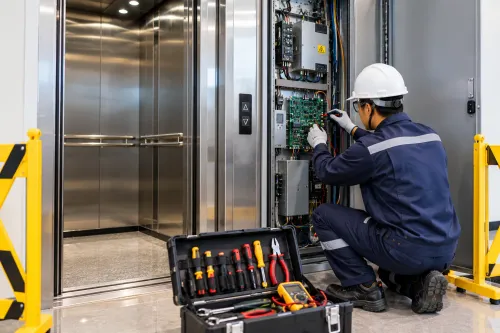
What does the site inspection cover before testing begins?
The inspector first checks whether the site is complete, accessible and safe enough for meaningful examination; installed machinery alone is not enough. Unfinished civil work, blocked access, incomplete landing finishes or missing pit and machine-room provisions can stop inspection.
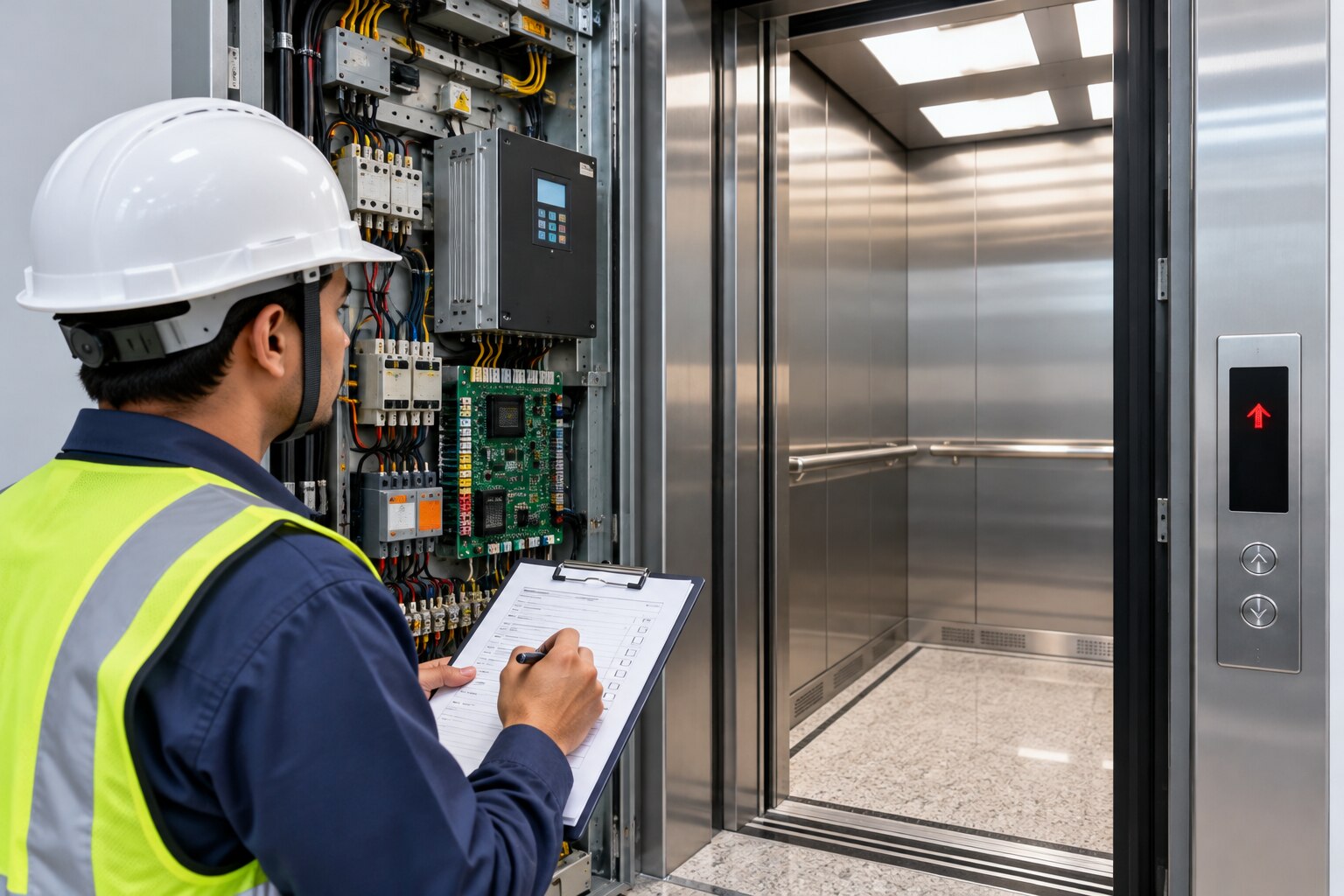
1. At each floor, the inspector examines the lift car, landing entrances, door locks and interlocks, emergency unlocking, guarding and rescue access. In the shaft and pit, the checks include traction ropes, the overspeed governor, safety gear, buffers, terminal stopping, lighting, drainage and protection from water ingress.
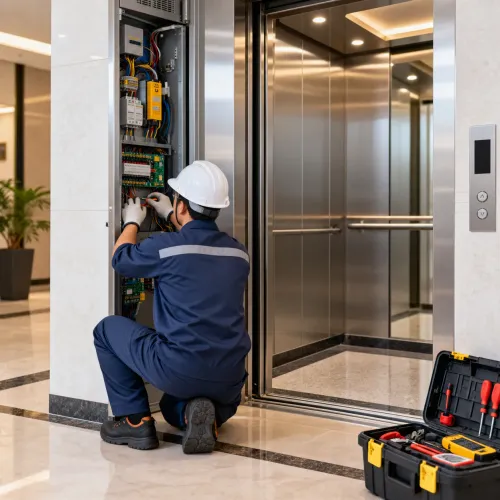
2. In the machine room or machine spaces, the inspector checks traction equipment, the machine brake, control panels, safety circuits, phase protection, insulation, earthing, ventilation and permanent electrical supply. Unsafe access or absent guarding prevents safe examination.
3. The inspector checks the emergency alarm or two-way communication, rescue arrangements and fire-related interfaces, including provisions affecting emergency operation. Temporary construction power, inadequate lighting or water entering the pit can make the inspection unsafe.
4. The inspector reconciles approved drawings with the installed lift, including identification details and safety components. For lift certification in Gurugram, resolve discrepancies before the appointment: a car that travels normally still fails meaningful readiness if a door interlock, earthing connection, access route or emergency communication is incomplete.
Which tests are performed, and when is re-certification required?
The inspector operates the lift under controlled inspection conditions, not just during an ordinary ride. Tests cover rated-load travel, starting and stopping, brake performance, levelling accuracy at every landing, door operation and interlocks, emergency lowering or rescue arrangements, overspeed protection, safety-gear operation, terminal limits, buffers, alarms, communication, earthing and safety-circuit response.
| Stage | What is checked | When it applies |
|---|---|---|
| Initial inspection | The completed installation is tested against approved drawings, rated load, speed, travel, stops and lift design before operation. | After a new lift is installed |
| Periodic renewal | The inspector repeats the required safety and performance checks and reviews maintenance, previous defects and test records. | At the renewal interval required under Haryana requirements |
| Major alteration | Revised drawings, updated technical documents, new tests and reinspection may be required after changing the controller, machine, brake, governor, doors, safety circuits or major traction equipment. | Before returning an altered lift to service |
| Accident or prolonged shutdown | Safety functions, damage, deterioration and the reason for withdrawal from service are examined before operation resumes. | After an accident or extended closure |
The exact schedule for the elevator certification process in Gurugram depends on Haryana requirements and the lift design. A change to rated load, speed, travel, stops, drive arrangement, machinery location or major safety equipment is not routine maintenance; confirm the approval route with the Haryana Electrical Inspectorate before work begins.
Cosmetic refurbishment has a different compliance impact when it leaves safety functions and rated performance unchanged. Lift certification in Gurugram therefore requires reinspection when the installation is technically different from the licensed design.
What happens when the inspector finds a defect?
A defect does not become a certificate merely because the lift runs after the visit. The inspector records each observation in the inspection report and identifies whether it affects safe operation, statutory compliance or the ability to complete a required test. Any of those findings can stop a licence from being issued or renewed.
1. Review the report against the installed lift. Failed door interlocks, ineffective brakes, defective overspeed protection, inadequate earthing, missing emergency communication, unsafe access and discrepancies between approved and as-built drawings require action before approval.
2. Rectify every observation and retain traceable evidence: invoices, photographs, component test results, revised drawings and signed completion records. Match each document to the lift identification and the affected component.
3. Submit the closure evidence through the applicable Haryana elevator certificate process. A consultant’s report or private safety certificate does not replace the statutory decision of the authorised inspector.
4. Prepare for a repeat inspection when the defect affects a safety function, changes the installation, prevents a required test or leaves the inspector unable to verify compliance. The inspector may need to witness the corrected interlock, brake, governor, earthing or communication system in operation.
Minor documentary corrections still require written closure. Until every observation is closed and accepted, the dossier is incomplete, even if the car travels normally. Clearance of one defect also does not cancel unrelated findings.
Which document proves compliance, and what should a consultant deliver?
Only the current Haryana statutory lift licence proves that the lift has been approved for operation. An AMC, service invoice or private report cannot replace it.
| Document | What it proves | What it does not prove |
|---|---|---|
| Haryana statutory lift licence | Authorised approval for that lift at that premises | That every later repair is complete |
| AMC or service invoice | Contracted maintenance or a visit completed | Statutory certification |
| Third-party safety inspection | Findings from an independent examination | Government approval |
| Manufacturer document | Equipment specifications, conformity or test information | A licence for the Gurugram installation |
| Private consultancy survey | Technical observations and recommended actions | An official certificate unless the authorised Haryana process accepts it for that case |
After approval, retain the current licence and inspection or test records with the maintenance contract, breakdown and rescue logs, manuals, wiring and control documents, test certificates, and defect-closure register.
Match every record to the lift identification and serial numbers on site, then track renewal before the licence expiry date; a current AMC does not cover an expired licence.
For procurement, require an elevator certification consultancy in Gurugram or lift compliance consultancy to provide measurable outputs:
- Drawing reconciliation and regulatory submission
- Pre-inspection checklist and witnessed test plan
- Observation register and closure evidence
- Licence tracking and a handover dossier
X Pro Elevators can be evaluated against those named deliverables, not a vague promise to “obtain a certificate.”
Related service
Elevator Certification and Consultancy Elevator Certification and Consultancy A lift survey can tell you just about anything you need to know about your lift. View service → |
Frequently asked questions
Who starts the elevator certificate process in Gurugram?
The owner or an authorised representative starts the application for one specific lift at one specific premises with the Haryana Electrical Inspectorate.
What does the site inspection cover before testing begins?
The inspection checks the lift installation and its safety-related components before the inspector allows or witnesses the required tests.
When is elevator re-certification required in Gurugram?
Re-certification is required according to the certificate’s renewal requirements and after changes that require the lift to be inspected again.
What happens when the inspector finds a defect?
The defect must be corrected before approval. Arrange the repair, retain evidence of the correction, and request the required follow-up inspection or testing.
Which document proves elevator compliance?
The certificate issued through the Haryana Electrical Inspectorate process is the key document proving that the lift has passed statutory certification.