
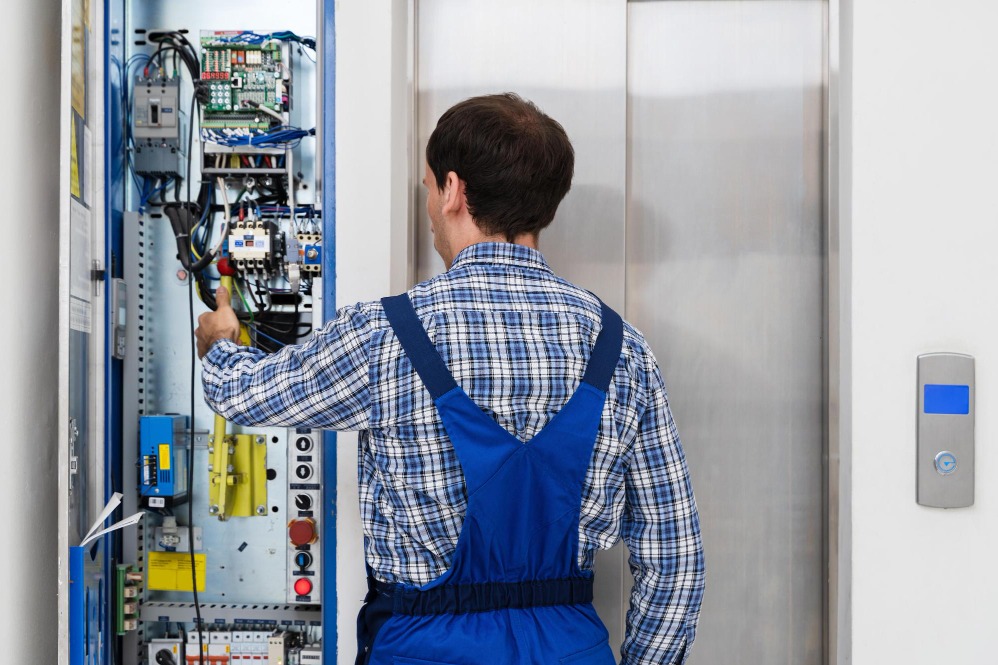
An ageing elevator does not automatically need complete replacement. At the same time, continuing to repair an outdated system indefinitely may become inefficient.
Elevator Modernization provides a middle path by upgrading selected mechanical, electrical, control, safety, or passenger-interface components while retaining suitable parts of the existing installation.
For older residential and commercial properties in Gurugram, Haryana, the decision should be based on equipment condition rather than age alone.
Start With Repair History
One isolated repair rarely justifies modernization.
A pattern of recurring faults deserves closer attention. Property managers should review maintenance records and ask:
- Are breakdowns becoming more frequent?
- Are similar components repeatedly failing?
- Is downtime increasing?
- Are replacement parts becoming difficult to obtain?
- Has ride quality deteriorated?
- Are control-system faults recurring?
The answers can help determine whether continuing with individual repairs remains practical.
Consider Component Availability
Older elevator systems may use controllers, drives, switches, door components, or other equipment that is increasingly difficult to source.
When replacement parts become scarce, even a relatively small failure can cause longer downtime.
Modernization can replace obsolete systems with more serviceable equipment where technically appropriate.
Compare Long-Term Costs
Repair cost should not be evaluated one invoice at a time.
Consider the combined cost of repeated repairs, emergency callouts, downtime, replacement components, operational disruption, and ongoing maintenance challenges.
Modernization involves upfront investment, but it may provide better long-term value when existing equipment requires frequent intervention.
Passenger Experience Also Matters
Older elevators may still function while providing increasingly uncomfortable service.
Typical concerns can include:
- Rough stopping
- Slow doors
- Noticeable vibration
- Inconsistent levelling
- Outdated controls
- Poor indicators
- Frequent service interruptions
Modernizing appropriate systems can improve the overall experience without necessarily replacing every elevator component.
Safety and Technical Compatibility Need Assessment
Modernization should never be treated as a cosmetic refurbishment alone.
Changes to controls, drives, doors, electrical equipment, safety systems, or other components require technical compatibility with the remaining elevator installation.
A detailed site assessment should therefore come before the upgrade plan.
Buildings Have Different Modernization Priorities
A residential apartment building may prioritize dependable everyday service and passenger comfort. A hotel may place additional emphasis on smooth operation and cabin presentation. Hospitals may have stricter operational continuity requirements, while offices and malls can experience intensive traffic.
X Pro Elevators can evaluate existing lift systems and identify modernization possibilities based on equipment condition and property requirements.
This is particularly relevant across Gurugram's mix of established buildings and rapidly evolving commercial properties.
Choose Based on Evidence
Modernization becomes worth evaluating when recurring repairs, component obsolescence, reliability concerns, operational limitations, and changing building requirements begin to overlap.
The correct solution might involve targeted upgrades, broader modernization, or continued maintenance depending on the elevator's actual condition.
A technical condition assessment provides a better basis for that decision than simply assuming an old elevator must be replaced.